Showing posts with label Texas. Show all posts

8.4.26

Bum Phillips' Autobiography feels like hanging with the great coach as he tells the story of his life


Bum Phillips: Coach, Cowboy, Christian – Bum Phillips, w/ Gabe Semenza (2010)


            In Texas, there are two legendary professional football coaches.  One is Tom Landry, a favorite of mine, who was a long-time coach of the Dallas Cowboys (who are NOT a favorite of mine. Boooooo!).  The other, and my own personal favorite NFL coach ever, is Bum Phillips, who coached professionally with the Houston Oilers and the New Orleans Saints and helped create the phenomenon known worldwide as the Luv Ya Blue era of Houston sports.  A true Texan original through and through, in word, deed, and spirit, Bum Phillips brought an energy and mindset to professional football coaching that went directly against the hard-ass, in-your-face, overly-demanding, workaholic, military-asshole “ideal” for football coaches.  In all my years as a fanatic of Bum Phillips, both as a coach and as an awesome human being, I have yet to hear, see, or read of anyone anywhere who has any type of negative comment about the man, including former opponents!  This is a rarity in the world.  My lovely wife knows of my deep admiration for coach Phillips, and surprised me with this book (a signed copy too!).  What a great gift for a football loving book nerd such as myself!

            I normally approach biographies and autobiographies with trepidation, having been burned before by self-aggrandizing, superfluous, and wildly rote works co-authored with ghost writers.  I was very excited about this book, however, because the co-writer aiding Mr. Phillips, Gabe Semenza, is someone who knew Coach Phillips for years.  I was pleasantly surprised to hear Bum Phillips’ voice in my head as I read this book.  Much like Coach Vince Lombardi, another legend of professional football, Bum Phillips’ voice lives on in my head, so when I read this book, I distinctly hear it in Coach Phillips Texan drawl.  Because of this, reading this book was an immense pleasure.  I immediately lost myself in the pages as I heard Bum’s voice inside my head while I read.  Gabe Semenza did a great job putting this book together, not covering up Coach Phillips’ voice, and allowing his natural cadence to exist on the page and propel the story of his life.

            The byline of this work states that Bum Phillips was a coach, a cowboy, and a christian.  Besides family itself, these are the three pillars upon which Coach Phillips built his life.  Coaching came natural to Bum Phillips, and he rose through the ranks of high school, Jr. College, Universities, and professional teams due to his love of the game itself, his ability to learn and apply wisdom gained while working for legendary college football coaches, and his own particular philosophy about how to lead men.  This personal belief stemmed from his experiences as a Marine in the second world war.  The verbally abusive drill sergeants taught Bum that their way was not the correct way to teach and train a grown man.  Yelling insults, demeaning a human being, essentially abusing them until they act as you want, these things seemed patently ridiculous to Bum Philips, and he swore that, if he ever got the chance to lead men, he would do it differently.  To paraphrase Coach Phillips, if you have to yell and cuss at someone to make them learn they will NOT learn.  They will just appease you until you shut up.  It was this core value that, through his professional life, made Bum Phillips stand out and be appreciated by those who worked for him.  He truly cared and loved about his “kids” as he called them.  He treated each one individually, as a human being, and achieved great things because of it, not the least of them being that nearly every single human that ever worked for or was coached by Bum Phillips feel they gained a father-figure, not just a coach.

            One great example of how Bum fostered a family atmosphere around the Houston Oilers was his policy for Saturdays.  Most NFL games are held on Sunday, and Saturday is usually treated as a dress-rehearsal of sorts.  Bum’s mindset was that, after working hard Tuesday through Friday, installing the gameplan for the upcoming Sunday, there was not much that could be changed or added on Saturday without messing everything up.  He treated these men like men, not like overgrown children.  Respect was given AND earned.  On Saturdays, Bum would tell the team, coaches, and staff to bring in their significant others and family to the Saturday practices.  For those players too young to have families, he encouraged they bring their pets!  The team would do a quick, pad-less run-through of the gameplan, then the rest of the day was spent listening to live music (famous country & western stars would come hang out and jam with the players!), playing dominoes, cards, and goofing around, and feasting on Texas barbeque or delicious Mexican or Tex-Mex food that Bum would have catered in.  The footage of these times seems ridiculous in its looseness and carefree nature.  No other team had such conviviality ingrained into their very essence.  This made the Oilers a family, and the City of Houston immediately understood it, loved it, and latched onto it as their defining trait.  Once Bum Phillips drafted the legendary Earl Campbell from the University of Texas, everything coalesced into the collective dream/fantasy we all know as the Luv Ya Blue era in Houston.

            Coach Philips takes us through his life, his efforts to learn more about football, and the endless job-hopping that is required of a sports coach in Texas.  He details his travels as he sought to always find work in the state of Texas.  He was either a head or an assistant coach at so many places, from West Texas State (Now UTEP), to high schools in Nacogdoches, all the way to an assistant coaching position with my alma mater, the University of Houston, where he was fortunate to coach his own son Wade Phillps, himself eventually becoming a respected and Super Bowl winning NFL defensive and head coach.  He discusses how his work life superseded his family life, and even though his children seem to understand and to accept who their father was, it still manages to draw a lot of regret and pain in Coach Phillips.  He understood the conflict that exists when the passion within you helps you succeed at your chosen profession to the detriment of your family life, and time spent with the very people you are working hard to provide for. 

In the mid-1980’s, Coach Bum Phillips retired from coaching and went back to the original love of his life, ranching and raising cattle.  Houston grew so fast and so big that what used to be a quaint ranch outside the city limits was quickly encroached by civilization.  Bum and his wife found a beautiful ranch property in South Texas and that is where he chose to spend the remaining decades of his life, with his friends, family, and animals.  It was around this time that a fateful phone call from an old Oilers player, Mike Barber, drew coach Phillips to a greater relationship with his spirituality.  Bum Phillips, along with many men of his generation, was a good man who sought to only do good in the world, and who wished no ill on anyone for anything.  However, he was not a “religious” man.  Coach Phillips lived a christian life, a true christian life, and did so because he felt it was right, not because of any religious or dogmatic requirements.  Everything changed when Mike Barber invited him to join him on one of his prison ministry visits.  Mike Barber had ministered to the incarcerated for a long time, and he knew that hearing from someone as respected and loved as Coach Bum Phillips could help start the healing for inmates.  Coach Phillips joined Mike as he visited the maximum security prison in Beeville Texas.  It set the course for the remainder of his life.  Until his dying day, Bum Phillips joined Mike Barber’s ministry and visited countless small and large correctional facilities. 

Coach Phillips truly lived a life of service.  All coaches are teachers, and the very best coaches become family.  Bum Phillips wanted to live life the right way, and through his example he shaped not only countless high school, college, and professional athletes, but also the very essence of Houston Texas, a city much misunderstood by the nation at large.  The City of Houston took on Bum’s persona, and it has never left.  This is still a humongous melting pot, and through good times and bad, the citizens of Houston try to treat each other like human beings.  This state of mind was reinforced by our beloved sports coaches, all of them more concerned with fostering family as a way to win than with winning itself, whether it be Bum Phillips with the legendary Houston Oilers, Rudy Tomjanovich with our beloved Houston Rockets, or DeMeco Ryans with our latest craze, the Houston Texans.  Bum Phillips did more good in the world in his 90-something years trodding the Earth than most people can imagine doing, and his method was human love and honesty.  There is no greater tribute to a man than to say, without any hyperbole, that he was universally loved, admired, and respected.  Sadly, it may seem that there are not many of those men left in our world, but we are out here, seeking to help those we can, support those we can, and attempting to foster brotherhood and community rather than rancor or divisiveness.  There are few true saints in our world, and I am very fortunate to have shared this life with Bum Phillips.  We all are.


(This wonderful book can be purchased used and new here: https://www.abebooks.com/9781935909026/Bum-Phillips-Coach-Cowboy-Christian-1935909029/plp )

13.5.19

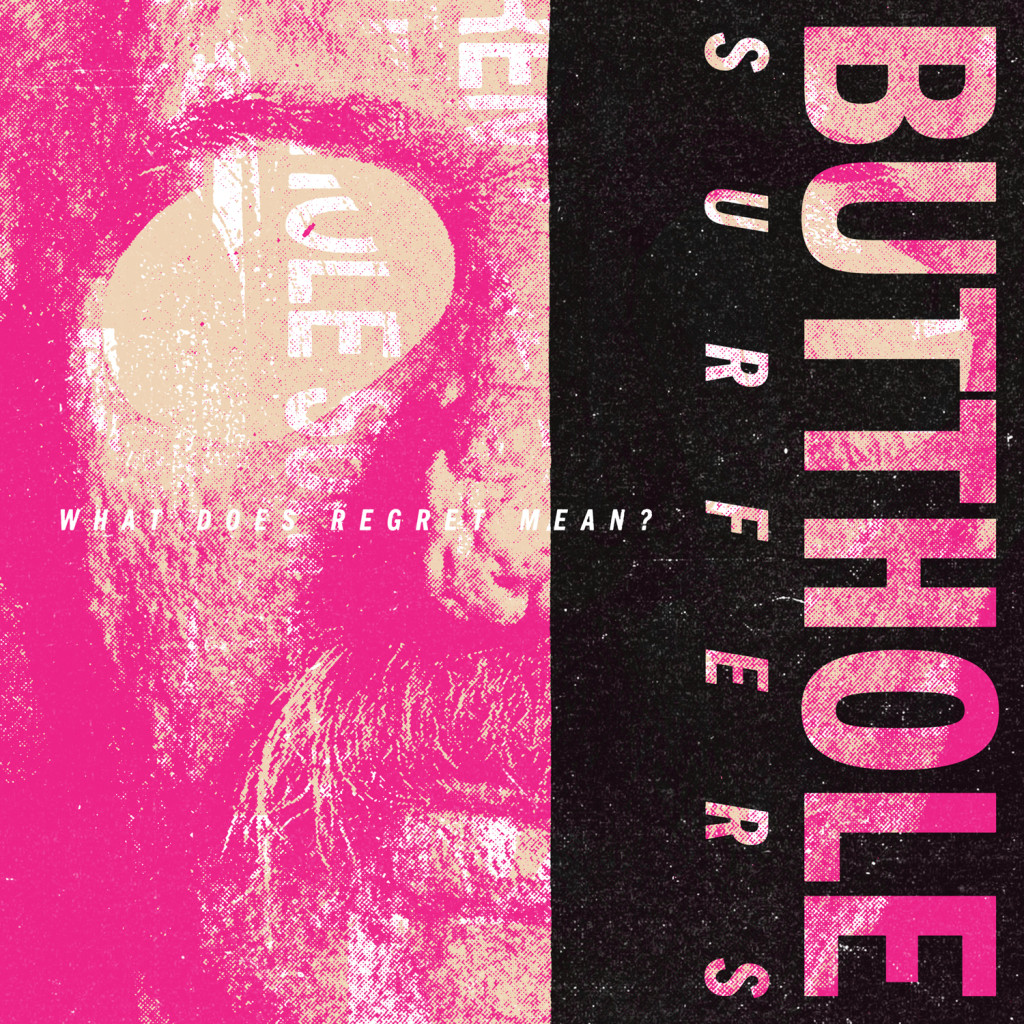
The Butthole Surfers Regret Not Regretting Anything


Butthole Surfers: What Does Regret Mean? – Aaron Tanner (2019)

            As a teenager, bored with hard rock and heavy metal for the most part, I sought out music that scared and excited and confused me because I was just so sick of the crap that MTV, radio, and the “norms” thought was good music.  I wanted the transgressive, the avant-garde, music that is so fresh and new and different that most people would hate it for years, until their feeble ears and brains could slowly catch up.  The first bands that sent me down this awesome spiral of skronk and freak-out were Jane’s Addiction and Sonic Youth.  Both were loud, rocking, and aggressive in completely different ways, and both sounded nothing like the formulaic heavy metal and thrash that had been rattling in my ears.  One band that was always mentioned alongside these two faves of mine was the Butthole Surfers.  

           My friends and I would drive into town in one of our parent’s cars on a Saturday and hit up the cool record stores.  At Sound Exchange, I would peruse the used cassette section, and every time I picked up one of the Butthole Surfers' albums, I would get a queasy feeling based purely on the visual aesthetic of their releases.  It was just SO WEIRD.  They did not list the band member’s names or song titles all that often, but what I did see is still burned into my mind.  I was too young and naïve to understand that an artist’s image is mostly a fabrication.  I was also too young and naïve to understand that the Butthole Surfer’s image was not in the least a fabrication, and that they were fully the weirdest single group of musicians I would ever have the fortune to listen to and love.

            Sometime in my first year of study at the University of Houston, my friend Barnaby Struve kept playing Butthole Surfers vinyl for me.  At one point he made me a 120 minute compilation cassette (remember when you could record 60 minutes of music on each side of a Memorex cassette?) of what he described as “the choice cuts.”  It was a revelation.  Even without any of the art, liner notes, or bizarre imagery, the music itself blew my teeny little mind.  I grew to LOVE these songs, to understand and relate to the insanity within, to see the undeniable beauty contained within, and to appreciate the balls it took for this band to stay true to their demented idea of themselves.  I played that cassette so many times.  I dubbed it for at least 5 different friends.  At parties, I would commandeer the stereo and play this Butthole Surfers compilation repeatedly (some people were not too happy about this).  The music was like instant intoxication, if that intoxication actually exposed the ugliest sides of ourselves.

            That was in 1991-1994.  The Butthole Surfers had been taking cares biz-nass since 1981.  Never during that time period would anyone even remotely aware of the Butthole Surfers consider that in 2019 a lavish, expensive, and downright beautiful coffee table art book would be released based mostly on the imagery the Butthole Surfers used in the promotional material, records, and merchandise.  Before the internet, the main way you found out about bands was from word-of-mouth, or lucking into seeing them as they opened up for someone you liked, or seeing a cool t-shirt on someone and striking up a conversation.  The Butthole Surfers were a band whose fandom grew in this manner, because everyone that witnessed a live show could not stop talking about it.  There was no other band like them.  There will never be another band like them.

            This book is like a deep time-slip dive into our collective Butthole Surfer past.  I cannot emphasize how often my shit-eating grin would appear on my face as I read this book.  Whether this was because of the many amazing images and fliers and promo materials, all presented like a DIY ‘zine, or because the commentary and remembrances sprinkled throughout brought me back to those times.  I was too young to see the Buttholes perform their insanity at small clubs in Texas, but I did get to see them perform many times, including at Lollapalooza where singer Gibby Haynes used a shotgun loaded with blanks to shoot at the crowd.  That shit was scary.  This book is scary.  The Butthole Surfers are scary.  They have to be.  I would not have it any other way.

            Aaron Tanner’s goal with this book was not to write a history, even though it is constructed sequentially.  He sought to share with the world just how individual and amazing the visual component of the Butthole Surfers’ myth was, from promo materials, to zines, to album notes, and personal photographs.  He has created something that I will treasure all the days of my life.  To top it all off, a flexi-disc is included with the book, containing a track that was to be used as a B-Side during the Independent Worm Saloon era.  Such cool stuff.  For a die-hard fanatic like myself, it is pure joy.

(BTW, I have played my wife 5 different Butthole Surfers songs over the past 8 or so years.  Each and every time she hears a new one, she tells me that it is "the single worst song she has ever heard."  This makes me laugh with glee and appreciation.)

(The Regular edition is sold out.  The Deluxe Edition is still available here: Melodic Virtue )

22.9.16

This Practical Guide to Texas Mushrooms is a Keeper!


Texas Mushrooms: A Field Guide – Susan Metzler, Van Metzler (1992)


            I have always been fascinated by fungi.  They grow faster than most plants.  They move and grow like animals.  They feed off of decomposing plant matter.  They have an extremely interesting life cycle.  They create fruiting bodies which are by turn delicious, toxic, beautiful, repulsive, smelly, and mind-altering.  Every culture has some sort of tribal history that refers to mushrooms and the fungi in general, for they are found nearly everywhere that humans exist.  They are some of the most important yet ignored parts of the cycle of life on Planet Earth.  Since I am lucky to live in the humid and temperate climate of Houston, Texas, United States, Sol System, Milky Way, Universe, I have access to a huge variety of mushrooms year-round.  While most people go off on excursions in the early morning hours after a good rain, I find mushrooms all around me in the apartment complex my wife and I reside in.  Being around them and spotting them on my daily dog-walks has become a hobby of mine.  Because of this I needed to find a reliable and photographically illustrated guide to the mushrooms of Texas.  After some research, I found out that there are not many such guides for mushrooms in general and definitely not for the specific area of Texas in which I live. 

            The Metzlers are a couple who have become amateur master foragers of mushrooms in Texas, and understanding that others like themselves needed a good primer for collecting mushrooms in our state, they set out to create just such a book.  It is a perfect book for someone like me, with a basic knowledge of fungi, but with a desire to learn the differences between the different families of mushrooms, and the way to identify which ones are delicious to eat without poisoning myself.  Luckily the amazing M.D. Anderson Library at the University of Houston where I work had this book on the shelves.  I Love Libraries!

            Having looked through several different field guides for mushrooms I instantly found this one to be great, both for its ease of use, and for its clear colorful photographs of the mushrooms which allow for far easier documentation and identification.  Their descriptions are stated in a non-technical manner, while at the same time providing the highly-technical language of the mycologists used to designate the different species and sub-species.  To a nerd like me this is as good as it gets.  I will have to make a point to purchase my very own copy of this book for my personal library.  It has inspired me to meet up with the mushroom foragers who hold semi-annual trips to the massive and lush forests of East Texas to search for edible or useful mushrooms and to educate those who attend about the forests, the fungi, and the relationships they hold to the living plants.  The following are two which hold forays around the Houston and Gulf Coast area.


            Fungi are nature’s decomposers.  Recently, scientists have been decoding the genomes of various fungi species and have found that they are even more closely related to animals than was originally believed.  They are like some sort of organism straddling the line between plant life and animal life.  Amazing stuff!  The mushrooms and puffballs that we all see above ground are just the fruiting bodies of the mycelium, a web of fungi sometimes acres wide that lives just below the surface of the soil, or the forest floor, or on dead and rotting fallen trees.  Many tree and plant species have relationships with specific fungi, like the morel mushroom, which creates a symbiotic relationship with forest trees like Pine, Poplar, and Oak.  The fungus extracts certain minerals and nutrients and binds them to the soil so that they can then be used by the tree, while the tree helps shield and nurture the mycelium growing underground. 

            I could go on and on about mushrooms.  I can’t help it.  They are some of the most mysterious life on this planet of ours and most people simply ignore them as they live their lives.  If they think about them at all it is as a food item to add to sauces or steaks or pizza.  I cannot wait to put the knowledge I have gained from this awesome book to practical use.  The state of Texas is in just the perfect location and has such a wide variety of climate within its borders that it is home to more mushroom species than nearly anywhere else in the country.  Both North American and South American species grow here, with an estimated 4,000+ species.  Of those, maybe just over 1,000 have been categorized or are known to the scientific literature.  What a science nerd’s dream it is to discover a new species, and describe it and name it.  I want to live that dream!

(This book can be purchased here: AMAZON  )